

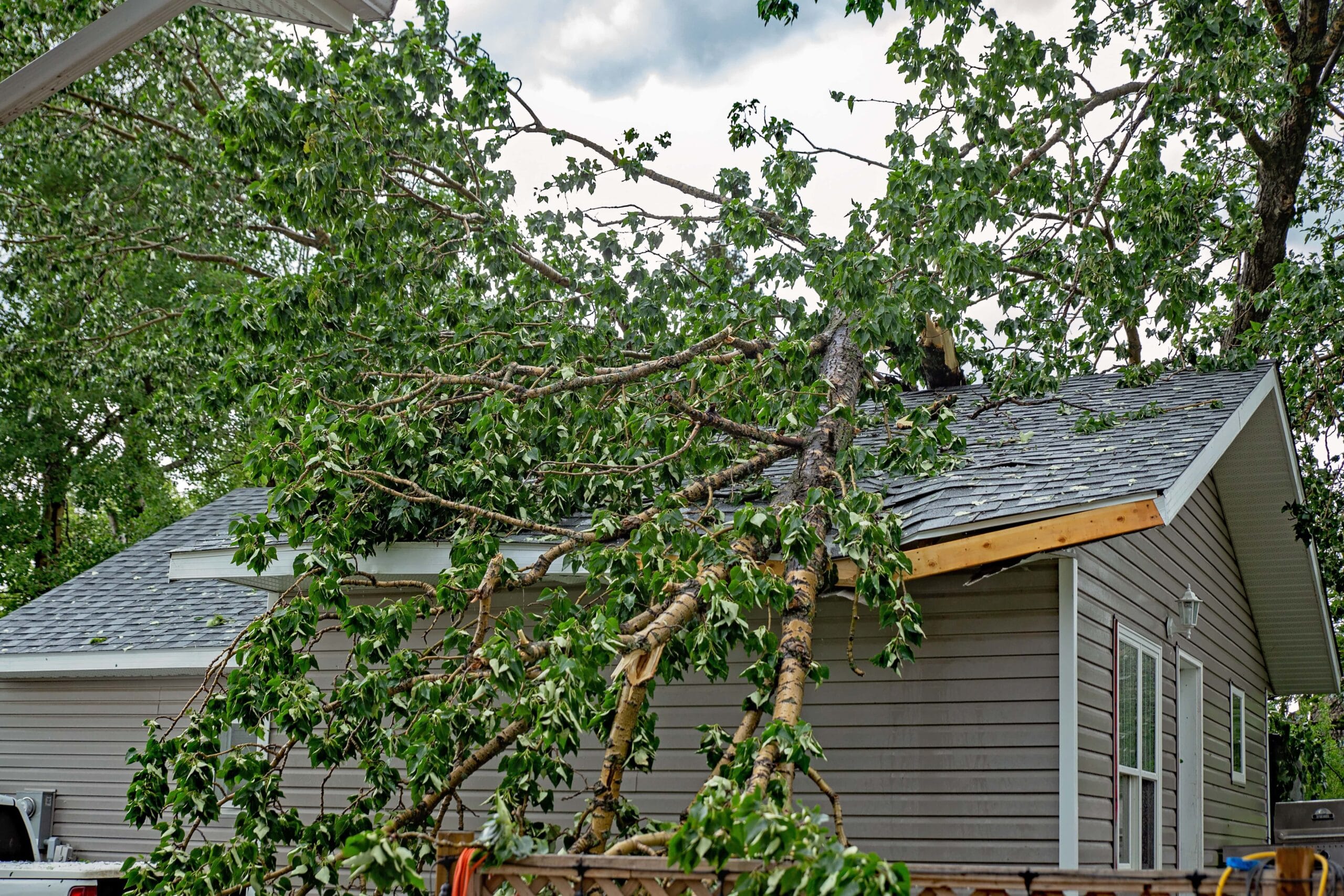
Homeowners insurance often covers sudden storm damage from wind, hail, lightning, or a fallen tree, but coverage depends on the policy, cause, limits, and deductible. Standard policies commonly exclude flood and earth-movement damage, so document the loss and contact the insurer promptly.
Last updated: July 30, 2026
How Does Insurance Cover Storm Damage?
Storm damage typically refers to damage caused by wind, hail, lightning, flooding, and fallen trees.
Most home insurance covers storm damage because it covers events related to extreme weather. For example, if a tree fell onto your roof and caused shingles to fall off, your insurance would probably cover this under structural damages.
Keep in mind that coverage varies depending on location. High-risk areas such as coastal cities (prone to hurricane activity) may not automatically receive coverage for storm related damage.
What Storm Damage Is Typically Covered?
Is Wind and Hail Damage Covered?
If the structure or interior of your home is damaged by wind or hail during a storm, most homeowners insurance policies typically cover this. The most common areas affected by wind and hail are the roof, siding, and windows.
Is Storm-Related Water Damage Covered?
Sometimes heavy rains can lead to water damage in a home. For example, if a storm weakened your roof and allowed water to seep in, you could need to replace drywall or flooring, which would be covered. (This is different from flood damage; more on that later).
Is Lightning Damage Covered?
Lightning is almost always covered with storm damage insurance. If your home is struck, any resulting fire, structural damage or electronic losses would be recognized by the insurance company as legitimate losses.
Is Damage From Fallen Trees Covered?
Fallen trees can be a tricky piece of the home insurance storm damage puzzle. If a fallen tree damages your house after a storm, it should be covered by your homeowners insurance. However, these damages won’t be covered if it damages your landscaping, walkway, or other uninsured areas.
What Storm Damage Is Commonly Excluded?
Is Flood Damage Covered?
Don’t be fooled by semantics—just because home insurance typically covers storm damage and water damage, it does not cover flooding by default. Standard policies often exclude flood damage and require separate flood insurance.
You can ask your insurance agent to clarify what type of water-related storm damage is covered beyond flooding or ask for a copy of your comprehensive policy and read the fine print.
Is Earth-Movement Damage Covered?
Most home insurance policies do not cover earthquakes or “earth movement.” This could mean damage from landslides or mudslides caused by storms may not be covered without a separate policy.
Can Neglect Cause a Claim Denial?
If your insurance company finds signs of prior neglect or pre-existing damage while assessing your home for storm damage, you will likely not be covered. Lack of regular home maintenance can nullify damage claims. For example, if your roof was already failing and needed repair, hail damage on the roof may not be covered.
Need help after severe weather? Call (801) 676-3500 for 24/7 storm damage restoration.
What Should You Do After Storm Damage?
Getting through a severe storm can be a harrowing experience—especially if your home sustains significant damage. When the storm has passed, there are a few things you should do right away.
- Be Safe
Always remember: safety first. Ensure the property is safe to inspect before entering the home or wandering around.
- Document Damage
Take photos and videos to document the storm damage for your insurance company. Be as thorough as you can, noting any changes both inside and outside.
- Contact Insurance
Contact your insurance provider promptly to start the claims process. The sooner you get in touch, the better, as this can be a lengthy process.
- Make Temporary Repairs
If needed, do your best to make temporary repairs to prevent further damage. This might look like putting a tarp over a damaged roof, boarding up a window, or placing a fan next to a wet spot.
- Get in Touch with a Restoration Company
Your insurance adjuster will contact a restoration company on your behalf to address storm damage, but you can choose a different provider if you have one in mind. You should be able to communicate with the restoration team throughout the repair process.
How Can You Prepare Before a Storm?
Most of us don’t know when a storm is coming, so it’s important to regularly review your home insurance policy to understand what exactly is covered and excluded.
If you live in an area prone to earthquakes and floods, you should consider adding additional coverage to your policy.
In the meantime, be sure to maintain your property to avoid claim denials due to neglect. Remember to document significant repairs, such as roof and siding replacement, so that you have solid proof.
How Can CDS Help After a Storm?
Does home insurance cover storm damage? For the most part, yes, but there are exceptions to be aware of such as flooding, earth movement, and neglect. Take a look at your policy to prepare for inclement weather, and add coverage as you see fit.
If you’ve been impacted by severe weather, contact us for the best storm damage restoration services, and get back on your feet in no time.
Insurance and Storm Damage Frequently Asked Questions
Does insurance cover storm damage?
It often covers sudden wind, hail, lightning, and falling-tree damage, subject to the policy.
Does insurance cover flooding?
Standard policies generally exclude rising surface water. Separate flood insurance may be required.
Is a storm-related roof leak covered?
Sudden wind or hail damage may be covered, while wear and poor maintenance may be excluded.
What should you do after damage?
Put safety first, prevent further damage when safe, take photos, keep receipts, and notify the insurer.
Should you call insurance or restoration first?
Contact both promptly to report the claim and prevent additional damage.
What documentation helps a claim?
Photos, video, inventories, records, receipts, inspections, and insurer communications can help.
Need professional restoration help? Learn about Certified Disaster Services’ storm damage restoration services or call (801) 676-3500 for 24/7 assistance.


