

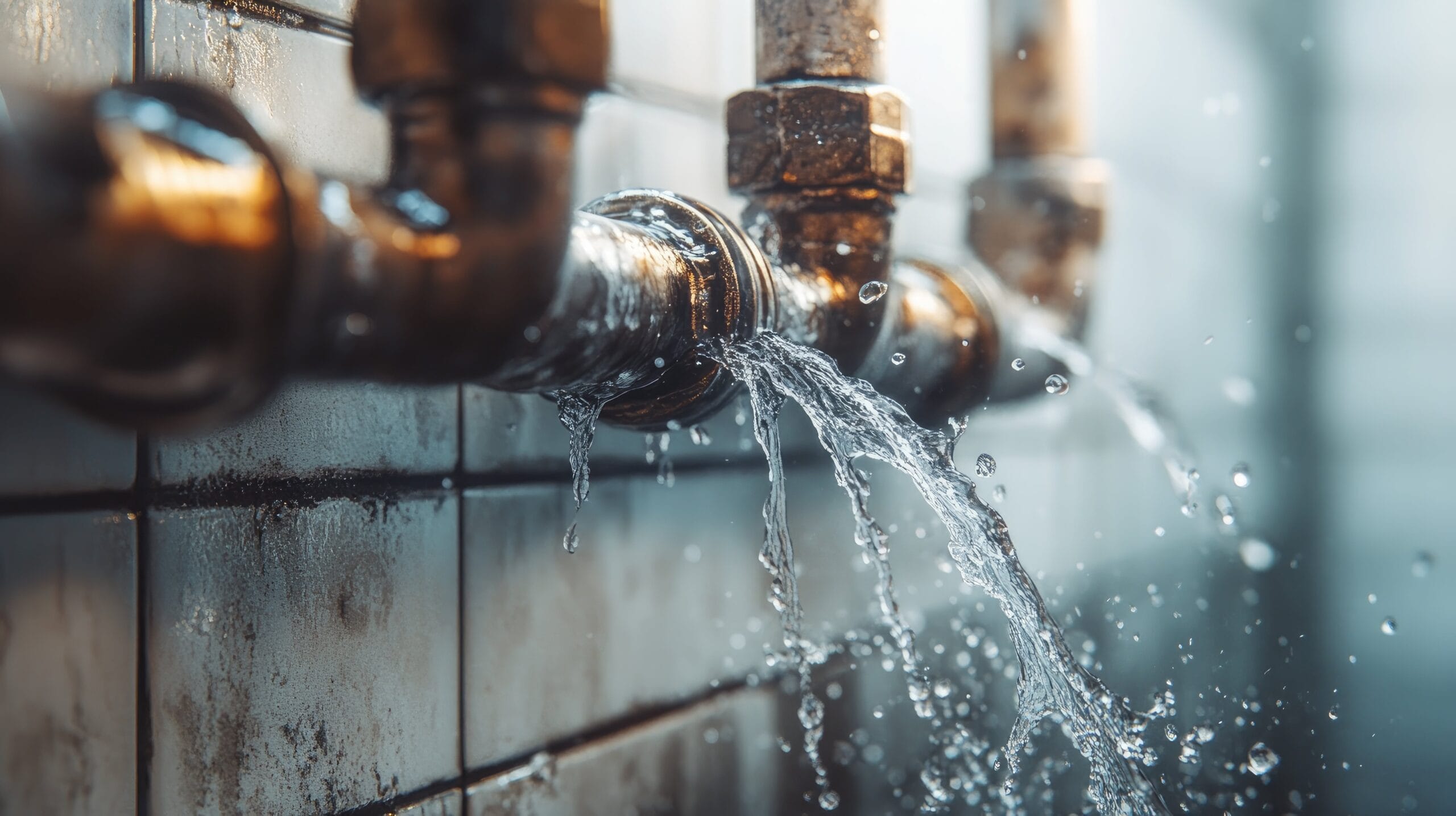
Pipes burst in winter because freezing water expands and creates pressure between an ice blockage and a closed faucet or valve. The pipe may split at a weak point, then release large amounts of water as the ice thaws.
Last updated: July 30, 2026
Why Does Freezing Water Create Pressure in Pipes?
Water is one of the few substances that expands when it freezes. As liquid water turns to ice, its volume increases by about 9 percent. When this occurs inside a sealed pipe, that expanding ice has nowhere to go, creating intense pressure within the pipe walls.
Over time, this pressure can cause the pipe to split or burst. The rupture often happens not where the ice forms but nearby, such as at a bend, joint, or weak connection. Even a small fracture can allow water to escape under high pressure once the ice begins to thaw. The result is flooding and extensive water damage throughout your home.
Where Do Frozen Pipes Usually Burst?
Not all sections of your plumbing are equally at risk. Pipes that run through uninsulated walls, basements, crawl spaces, and attics are especially vulnerable because they are exposed to cold air for longer periods. Bends and joints are more likely to fail since they experience additional stress from expansion and contraction.
Outdoor hose bibs, sprinkler lines, and plumbing near foundation walls are other common areas where pipes can freeze and burst. It often happens overnight when temperatures drop suddenly, catching homeowners off guard.
How Does Poor Insulation Increase the Risk?
Poor insulation is one of the biggest contributors to pipe bursts in winter. When cold air seeps into walls or crawl spaces, it lowers the temperature of pipes running through those areas. Heat loss from inside your home through gaps, cracks, or poorly insulated walls can also make nearby plumbing colder than expected.
Proper insulation helps maintain a consistent temperature and keeps pipes above freezing. Insulating both hot and cold water lines, sealing air leaks, and keeping cabinet doors open under sinks during extremely cold nights are simple but effective preventive steps.
How Does a Small Crack Become a Major Leak?
A pipe usually does not explode all at once. It often starts with a small crack caused by internal pressure. As water flow resumes and temperatures fluctuate, that minor crack can widen quickly and turn into a full rupture. When this happens, homeowners often ask, what happens when a pipe bursts?
The answer depends on how quickly you respond. Even a small burst can release hundreds of gallons of water in just a few hours, soaking drywall, flooring, insulation, and personal belongings. Mold growth can begin within 24 to 48 hours if the area is not properly dried and restored.
Can Repeated Freezing Damage Pipes?
Winter brings not just freezing but also thawing. These frequent freeze-thaw cycles cause pipes to expand and contract repeatedly, weakening joints and fittings over time. Even if a pipe does not burst during the first freeze, the repeated stress can make it more likely to fail later in the season or in early spring.
This cycle also causes hidden leaks in walls and ceilings. Water may seep slowly at first, but as temperatures warm, those leaks can worsen and lead to mold, structural damage, and expensive repairs.
Dealing with a burst pipe? Shut off the water if safe, then call (801) 676-3500 for 24/7 water damage restoration.
What Should You Do If a Pipe Bursts?
If you ever experience a burst pipe, quick action is essential. Follow these steps immediately:
- Shut off your main water supply to stop the flow of water.
- Turn off electricity in the affected area if flooding has occurred.
- Call a professional restoration company to mitigate the damage and begin cleanup.
- Document the damage for insurance purposes with photos or videos.
- Avoid using heat sources like open flames to thaw pipes since this can cause further damage or create fire hazards.
Who Can Help After a Winter Pipe Burst?
When winter water disasters strike, Certified Disaster Services is prepared to respond at any time, day or night. The team specializes in frozen water pipe repair, water extraction, and full restoration to bring your home back to normal quickly. Whether you are dealing with a minor leak or a major flood, Certified Disaster Services is available 24/7 to handle emergencies with the skill and equipment needed to prevent mold and secondary damage.
Their technicians understand the unique challenges of cold-weather restoration and can repair, dry, and restore your property with care and precision. With decades of experience serving Utah homeowners, Certified Disaster Services is the name you can trust to protect your home and peace of mind.
How Can You Reduce the Risk of Burst Pipes?
Understanding why pipes burst in winter helps you take preventive action before temperatures drop. Insulate vulnerable areas, seal heat leaks, and act fast if a pipe freezes or bursts. And if the unexpected happens, remember that Certified Disaster Services is always available to help restore your home and minimize damage.
Frequently Asked Questions About Frozen and Burst Pipes
Why do frozen pipes burst?
Expanding ice can create pressure inside a blocked pipe and split a weak section.
Do frozen pipes always burst?
No, but they remain at risk until thawed safely and checked for leaks.
Where do pipes freeze most often?
Exterior walls, crawl spaces, garages, attics, and poorly insulated areas are vulnerable.
What should you do after a burst?
Shut off the water if safe, avoid electrical hazards, and call plumbing and restoration professionals.
Can you thaw a pipe yourself?
Use only gentle heat on accessible pipes and never an open flame. Call a professional for leaking or hidden pipes.
How can you prevent frozen pipes?
Insulate pipes, seal air leaks, disconnect hoses, and keep indoor temperatures stable.
Need professional restoration help? Learn about Certified Disaster Services’ water damage restoration services or call (801) 676-3500 for 24/7 assistance.


